Hoppers
Hoppers 2026 Review: Pixar’s Best in Years
AT A GLANCE
Pixar has spent the better part of a decade recycling its greatest hits. Hoppers is the studio’s answer to the question fans have been asking since Coco: what happens when they stop playing it safe? Director Daniel Chong delivers a film built on one of the most inventive premises in the studio’s thirty-year history, a voice cast that earns every scene it’s in, and enough genuine wit to keep adults as invested as the kids beside them. This is the animated film of 2026. Go see it.
Hoppers Review: Pixar Swings Big and Doesn’t Miss
Pixar’s Hoppers review verdict: see it in theaters. After years of sequels that played it safe and originals that felt like they were built by algorithm, director Daniel Chong has made something that feels genuinely alive. Hoppers is inventive where recent Pixar has been cautious, funny where it’s been sentimental, and sharp where it could have been saccharine. It’s the film that proves the studio still has the creative engine that made it great.
What Is Hoppers?
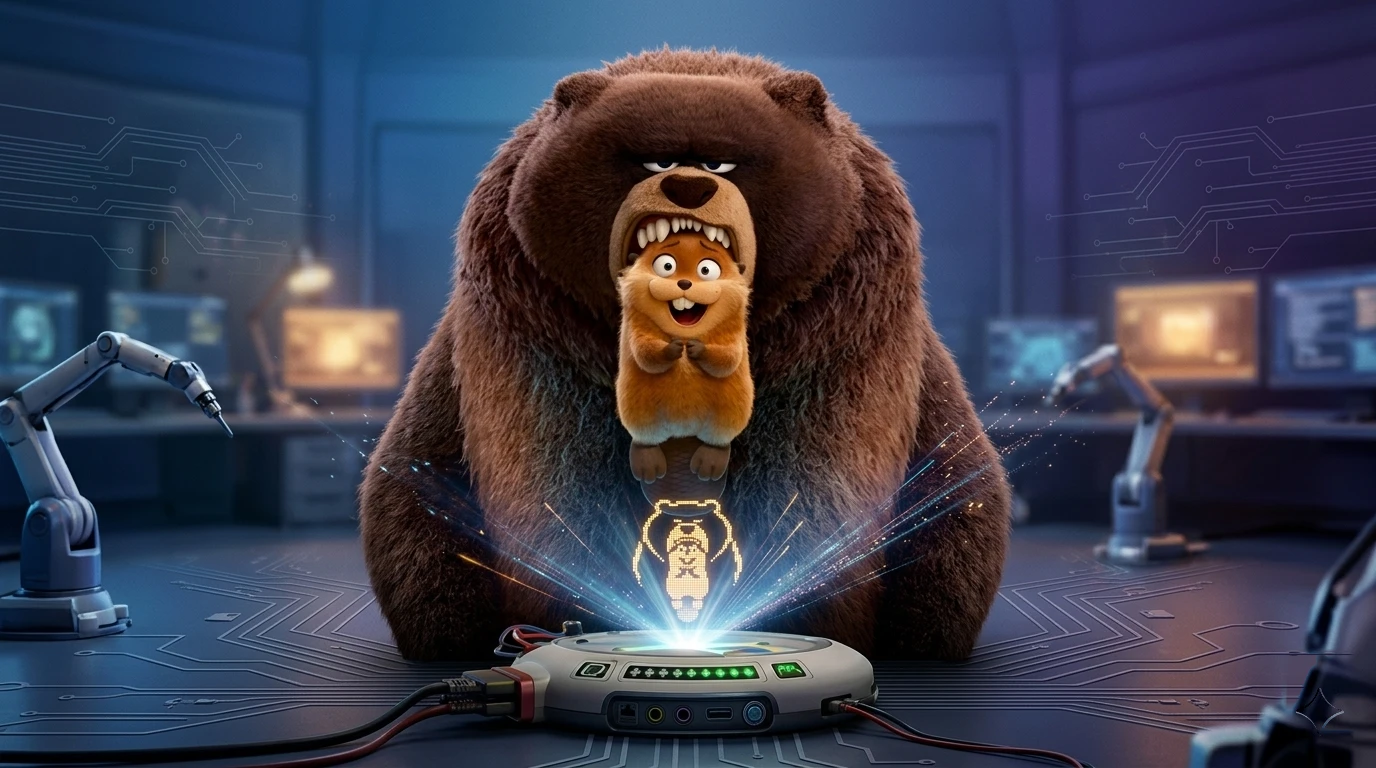
The premise is the kind that sounds ridiculous in a pitch meeting and miraculous on screen. Scientists have discovered how to transfer human consciousness into lifelike robotic animals, letting people experience the world from inside the body of another species. Mabel, an animal lover with more enthusiasm than patience for the bureaucracy controlling the technology, gets access — and immediately finds that the natural world operates nothing like the cozy nature documentaries she grew up watching.
Predators are not villains. Prey are not victims. Environmental collapse has fractured every ecosystem into its own desperate political negotiation. The coalition-building that Mabel tries to engineer between species collapses almost immediately into the kind of chaotic, self-interested quagmire that anyone who has ever sat through a committee meeting will recognize. That edge — the film’s willingness to be genuinely mordant about the difficulty of collective action — is what separates Hoppers from safer animated fare. Daniel Chong is not making a nature documentary with jokes. He’s making something thornier and more interesting than that.
The Experience
Hoppers moves with the kind of confident, escalating energy that the best Pixar films have always operated at. The opening act establishes Mabel fast — her obsession, her frustration, her impulsiveness — and the film uses that character foundation to make every subsequent scene pay off. When she hops into a robotic beaver and finds herself immediately in over her head, the stakes feel real because the character does.
The comedy is broad enough to land with younger audiences and specific enough that adults get a different, sharper version of the same jokes. Physical gags work in tandem with dialogue that assumes its audience is paying attention. The pacing through the first and third acts is excellent — the film moves, and when it slows down to let an emotional moment breathe, it has earned that space.
Bobby Moynihan’s character is the film’s secret weapon. His role functions as both the biggest recurring source of laughs and the moral center the story eventually anchors to. Jon Hamm and Meryl Streep do exactly what you’d expect from two actors of that caliber with voice roles: they make every scene they’re in better. Piper Curda holds it all together as Mabel with charm and the right amount of visible frustration that never tips into unlikability.
What Works
The premise is the strongest in Pixar’s catalogue since Inside Out. More importantly, the film doesn’t squander it. Hoppers uses its concept to build a fully realized world with its own internal logic — animal politics, predator-prey dynamics, the physics of consciousness transfer — and then puts that world under genuine pressure. The result is a film that rewards attention without demanding it.
The animation is the best work the studio has delivered in years. The animal environments are dense and specific, each ecosystem visually distinct in ways that carry narrative weight. The robotic animal designs thread the needle between cute and functional without tipping into either uncanny territory or generic cartoon softness. Individual sequences — particularly anything set in the beaver colony and a mid-film chase through a raptor nesting ground — are pure spectacle.
The message the film carries about collective action and environmental stewardship lands because the story earns it through plot mechanics rather than lecture. Hoppers trusts its audience to make the connection without having a character explain it.
What Doesn’t
The second act is where Hoppers loses its footing, briefly but noticeably. The world-building becomes dense enough that the film’s pacing stalls under the weight of it, and younger children may find the animal coalition politics harder to follow than the simpler emotional through-line of the opening. It’s the one section of the film where Chong loses the thread — there are ten minutes in the middle where the movie is building toward something without giving the audience quite enough to hold onto while it does.
The environmental themes, handled with subtlety in the first and third acts, get heavy-handed in a specific second-act sequence that spells out what the film has been showing rather than trusting its earlier work. It’s a minor miscalculation in an otherwise confident film. It doesn’t undermine the whole — but it’s the moment where a tighter edit would have helped.
Who Is Hoppers For?
Take the whole family. Hoppers works at every age simultaneously, which is a harder trick than it sounds. Kids get physical comedy, a propulsive adventure, and characters with clear emotional arcs. Adults get a film with genuine wit, a premise that holds up to scrutiny, and a voice cast doing real work. The PG rating is accurate — nothing here that warrants concern, and plenty that earns sustained attention from everyone in the row.
Skip it if: You’ve developed a categorical aversion to animated films regardless of quality. Otherwise, there is no version of this film where you regret going.
Final Thoughts
Hoppers is the Pixar film that justifies the faith its audience has been extending on credit since Coco. Daniel Chong has made a film that trusts its premise, its cast, and its audience — a combination rarer than it should be in mainstream animation. The second act wobbles, but the film lands where it needs to. See it on the biggest screen available. The animation deserves it, and so does the story.
✅ What Works
- Strongest Pixar premise since Inside Out — and the film doesn’t squander it
- Best animation the studio has delivered in years — every ecosystem visually distinct
- Comedy works at every age simultaneously — a genuinely rare trick
❌ What Doesn’t
- Second act loses the thread — ten minutes where the world-building stalls
- Environmental themes go heavy-handed in one sequence — a tighter edit would have helped