Fire Tower Review: A Fast, Fiery Board Game Full of Chaos and Strategy
A tense, accessible fire-spreading game that delivers big moments in under an hour.
✅ What Works
- Easy to learn, hard to put down
- Creates memorable moments instantly
- Great for families and casual players
❌ What Doesn’t
- Limited depth for hardcore gamers
- Luck can feel frustrating
- Only up to 4 players
Fire Tower is a light-to-midweight competitive board game that mixes strategy, tension, and a little luck into a very fun package. It is easy to learn, looks great on the table, and creates memorable moments almost immediately. While it may not be deep enough for every hardcore board gamer, it is an excellent pick for families, casual players, and anyone who enjoys direct player interaction.
What Is Fire Tower?
Fire Tower is a competitive board game where players try to protect their own tower while spreading fire toward everyone else. The theme is simple but strong: you are not trying to stop the wildfire, you are trying to survive it longer than your opponents.
Released in 2019 and designed by Samuel Bryant and Gwen Ruelle, the game stands out because it takes a very basic concept and turns it into something exciting. Fire spreads across the board, wind changes the danger, and every player is looking for the right moment to attack, defend, or redirect disaster toward someone else.
At a glance, it is a strategy game with family appeal. It plays in about 45 minutes, supports up to 4 players, and works well for a wide age range from kids to adults.
First Impressions and Component Quality
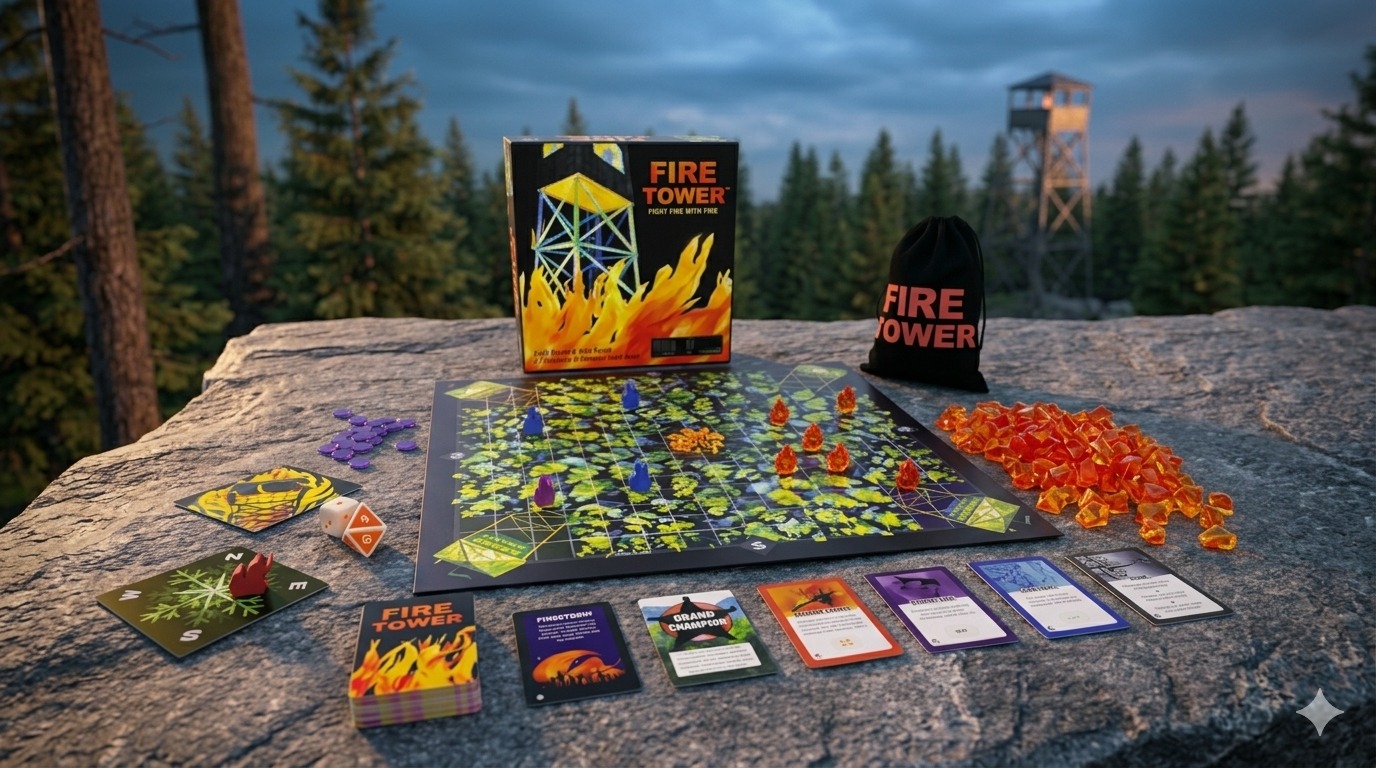
One of the best things about Fire Tower is the way it presents itself. Right from the moment you open the box, the game feels polished. The components are high quality, the art is memorable, and the overall look on the table is very attractive.
That matters more than some people think. In a game like this, theme and visuals are a big part of the experience. Watching the board slowly fill with fire is what makes the gameplay feel dramatic. The artwork helps sell that tension, and the pieces do a good job of making the game feel more exciting than a plain abstract strategy game.
This is not one of those games that feels cheap or forgettable. It has personality, and that gives it a strong first impression.
Setup and Rules
Another strength of Fire Tower is that it does not waste your time. Setup is quick, and the rules are easy to learn. New players should be able to understand the basic flow of the game pretty fast, which makes it easy to bring to the table with family or casual friends.
The turn structure is part of why it works so well. On your turn, you are usually doing two main things: placing fire and playing a card. That is simple enough for beginners, but the decisions around where to place that fire and when to use certain cards create real tension.
The rules do not feel confusing, and that helps the game get going fast. In my opinion, this accessibility is one of the game’s biggest strengths. It gives you enough strategy to stay interesting without becoming hard to teach.
How the Game Feels in Play
The best word to describe Fire Tower is tense.
Once the game starts, there is constant pressure because the fire keeps spreading and the danger is always visible. Even when it is not your turn, you are paying attention. You are watching where the flames are headed, hoping the next move does not suddenly put your tower in danger.
That is what makes the game so engaging. There is very little downtime, and every turn matters. The pacing is fast, and the board state can shift quickly. A player who seems safe can suddenly become the next target after one smart card play or a change in wind direction.
The gameplay is fun right away. It does not need a long buildup before it becomes exciting. The tension starts early, and that helps make the first play especially memorable.
Strategy vs. Luck
Fire Tower uses a mix of skill and luck, and I think that is the most honest way to describe it.
There is definitely strategy here. You need to think about timing, positioning, and how to use your cards. Different strategies can work depending on the state of the board. Some players may lean more defensive, while others play more aggressively and try to pressure opponents early.
At the same time, luck is part of the experience. The cards you draw can make a difference, and sometimes you may get options that are less helpful for your current situation. That can be frustrating, especially if you are the type of player who prefers games where skill is the clear deciding factor.
Still, for the kind of game Fire Tower wants to be, the balance works well enough. The randomness adds surprise and keeps the game from feeling too predictable. It also helps less experienced players stay competitive.
Best Player Count and Group Type
Although the game works with different player counts, it feels best with 4 players. That is where the table feels the most alive. There is more interaction, more shifting pressure, and more chances for players to influence each other.
This also means the game has one of its biggest weaknesses: players can gang up on one person. If that happens, one player may feel singled out or get knocked into a rough position early. That is not unusual in a direct conflict game, but it is worth mentioning because some groups enjoy that style more than others.
For the right audience, though, this is a big plus. Fire Tower works well for:
- Families
- Casual gamers
- Newer board game fans
- Groups who enjoy competitive, interactive games
It may be less appealing to players who mainly want big, heavy, deeply strategic box games with very low randomness.
Replay Value
The game does not feel repetitive, and the combination of fire spread, wind direction, and cards helps each match feel a little different. Different strategies can work, and the board creates changing problems every time you play.
That said, I would not say Fire Tower gets dramatically better the more you play it. For me, its biggest strength is the immediate fun and excitement it creates rather than long-term strategic depth. The first few plays may actually be the most memorable because the chaos feels fresh and unpredictable.
That is not really a bad thing. Not every game needs to become a lifestyle game. Sometimes it is enough to be a solid, exciting title that works well on game night and consistently delivers fun moments.
What Fire Tower Does Best
The strongest parts of Fire Tower are easy to identify.
First, it creates memorable moments. Few things in the game are as satisfying as watching a plan come together and seeing another player’s tower finally go down.
Second, it has strong production quality. The components, art, and overall presentation give the game a lot of table appeal.
Third, it is easy to teach. That makes it much easier to recommend to mixed groups of players.
Finally, the game keeps people engaged. With very little downtime and a constantly changing board, players stay invested in what is happening.
Where It Falls Short
The biggest weakness is the luck factor. Sometimes certain cards just do not help much, and that can make the game feel a little swingy.
It is also not the deepest strategy game out there. Players looking for a heavier, more complex experience may feel that Fire Tower is a bit too light or chaotic for their taste.
And because the game is so interactive, it can occasionally create that “everyone attack one player” feeling. Some groups will laugh that off. Others may find it frustrating.
Is It Worth It?
Yes, especially for the right kind of player.
If you want a game that is:
- easy to learn
- visually appealing
- competitive
- quick to set up
- full of dramatic moments
then Fire Tower is worth a look.
I would especially recommend it to upcoming board game enthusiasts, families, and players who want something different from the usual fantasy or resource-management style board game. It feels fresh because of its fire-spreading theme and the way the board itself becomes part of the threat.
I would be more cautious recommending it to hardcore players who mostly want massive, highly strategic games with very little randomness.
Final Thoughts
Fire Tower is a fun, fiery strategy game that succeeds because it knows exactly what it wants to be. It is not trying to be the deepest or most complicated board game on the shelf. Instead, it focuses on giving players quick setup, simple rules, strong table presence, and exciting moments.
That combination makes it easy to recommend.
For families and casual groups, it is a very good pick. For serious hobby gamers, it may work better as a lighter game between heavier sessions. Either way, it is memorable, different, and easy to enjoy.
Final Score