Harry Potter and the Prisoner of Azkaban
Harry Potter and the Prisoner of Azkaban : Does it Live up to the hype?
Harry Potter and the Prisoner of Azkaban Review: The Book That Changes Everything
There is a moment somewhere in the middle of Harry Potter and the Prisoner of Azkaban where the series quietly stops being a children’s adventure and starts becoming something bigger. The story gets darker, the stakes get more personal, and the characters start carrying actual weight. By the time the final reveal lands, you realize J.K. Rowling has been building toward it from the very first chapter, and every piece of it clicks into place. That is the kind of plotting that earns a book its reputation, and Prisoner of Azkaban has one of the best among fans of the entire series.
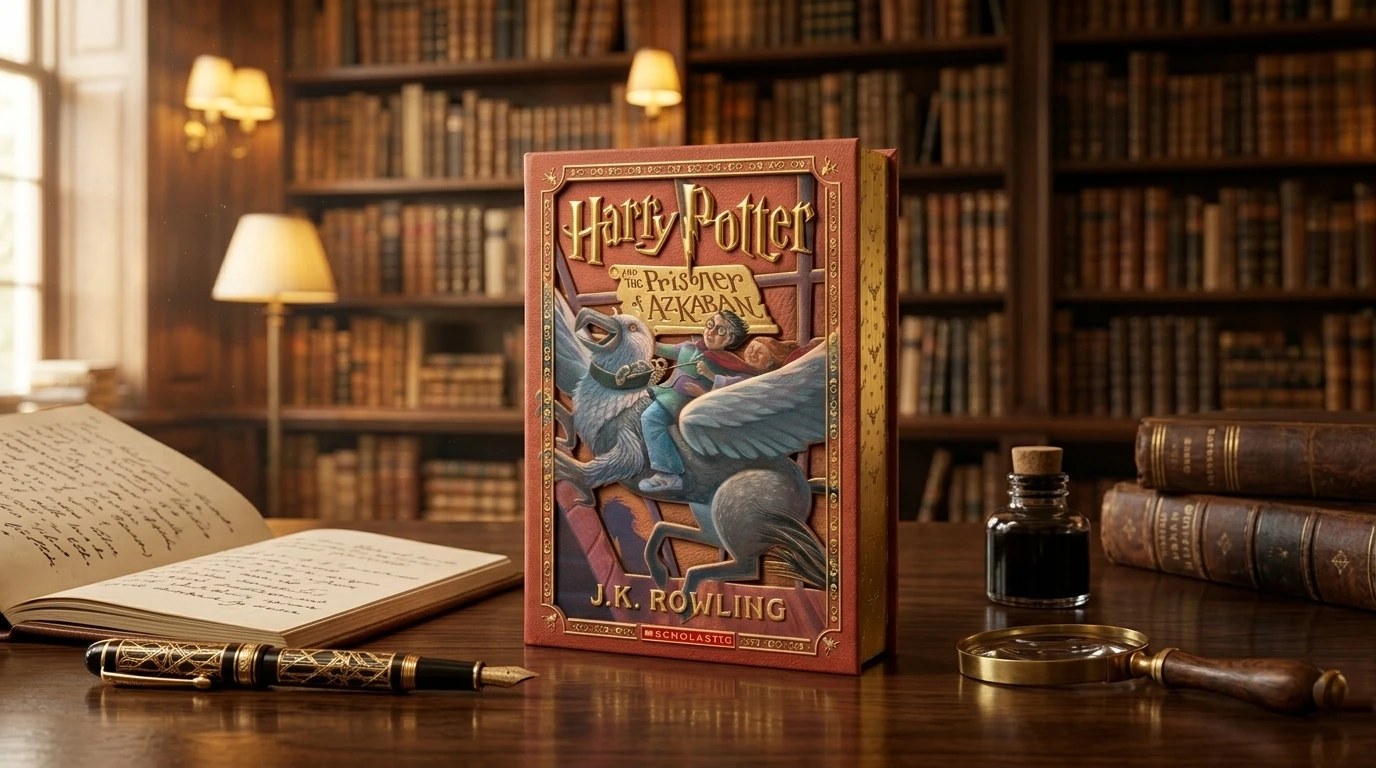
This review covers the Jim Kay Illustrated Edition, first published in 2015, which pairs Rowling’s original unabridged text with over 115 full-color illustrations across every chapter. It is the same story, made even more worth owning.
What Is Harry Potter and the Prisoner of Azkaban?
The third book in the series follows Harry into his third year at Hogwarts. The threat this time is Sirius Black, a prisoner who has escaped from Azkaban and who the wizarding world believes is a loyal servant of Voldemort hunting Harry down. The school is put under watch by Dementors, soul-draining guards from the prison who affect Harry more than anyone else around him. A new Defense Against the Dark Arts teacher, Professor Lupin, becomes one of the most important figures in Harry’s life. And at the center of it all is a mystery involving Harry’s late parents, a group of old friends, a long-buried betrayal, and a rat that is not what it appears to be.
SparkNotes identifies several of the book’s core themes as justice, the corrupting influence of power, and the idea that nothing is ever simply what it seems. Lupin is a respected professor who is also a werewolf. Sirius Black, built up as a villain for the entire book, turns out to be innocent. Hermione begins breaking rules. Every assumption the reader makes gets flipped, and Rowling handles each reversal with precision.
Why Readers Consistently Call This the Best Book in the Series
Ask any longtime Harry Potter fan to name their favorite installment and a significant portion will say Prisoner of Azkaban. The reasons tend to cluster around the same few things.
First, the plot is structurally tighter than anything that came before it. The mystery at the heart of the book is genuinely well-constructed, with the time-turner sequence in the final act rewarding readers who paid close attention to earlier chapters. Goodreads readers frequently describe the ending as the point where they realized just how carefully everything had been laid out from the start.
Second, this is the book where the characters start growing up in real ways. Harry takes more initiative here than in either of the first two books. He escapes his summer misery on his own terms, learns a complex and emotionally demanding piece of magic in the Patronus charm, and by the end faces a hundred Dementors to protect the people he loves. SparkNotes points to this arc as a key marker of his development across the series.
Third, the new characters are outstanding. Professor Lupin is widely regarded by the fandom as one of the greatest teachers in all of fiction, someone who meets Harry with genuine care and pushes him to grow without ever making him feel small. Sirius Black, once the twist arrives, becomes one of the most emotionally resonant figures in the entire story. The backstory involving the Marauders and Harry’s parents adds a whole new layer to the world, one that pays off across the remaining four books.
Amazon reviewers consistently highlight the pacing as a standout quality, noting that despite its length the book never drags. Kirkus Reviews echoed the same point at the time of its original publication, observing that the story moves so efficiently it reads shorter than its page count.
Affiliate link — we may earn a commission at no extra cost to you.
What the Illustrated Edition Adds
Jim Kay’s artwork turns an already strong reading experience into something genuinely special. His interpretations of the Dementors, Buckbeak, the Shrieking Shack, and the Whomping Willow are all rendered with a level of detail that rewards slow, careful looking. Every spread contains small touches you will keep discovering on return visits, from background creatures to architectural detail in the castle corridors.
Amazon buyers who own multiple editions consistently rate this one as the best physical book in the series to own. The pages are thick, the color reproduction is vivid, and the illustrations accompany the text on nearly every page rather than appearing only at chapter breaks. For parents reading aloud to children, reviewers note that it transforms the experience entirely. For adult fans revisiting the series, it offers a genuinely fresh angle on a story they already know.
The one note worth raising is that some readers who prefer to read quickly find the illustrated format slightly disruptive to their pace, since the temptation to stop and study each spread is real. That is not a criticism so much as a heads-up about what kind of reading experience this edition creates.
What the Story Gets Right That the Film Did Not
The 2004 film adaptation directed by Alfonso Cuaron is widely considered one of the better entries in the movie series. But readers who love the book consistently point to things the film softens or skips entirely. The Marauder’s Map backstory is compressed. The emotional texture of the Lupin relationship is thinner on screen. And the final act, with Harry and Hermione using the Time-Turner, loses some of its layered logic in translation. If you have only seen the movie, the book has substantially more to offer than you might expect.
Final Thoughts
Harry Potter and the Prisoner of Azkaban is the point in the series where everything clicks into a higher gear and never really comes back down. The plotting is some of the sharpest Rowling ever produced, the character introductions are the best in the series, and the themes around justice, fear, and loyalty run deeper than the surface story suggests. The Jim Kay Illustrated Edition adds a physical beauty to it that makes it worth owning even if you already have another copy on your shelf. Whether you are reading it for the first time or returning to it after years away, this one holds up completely., sometimes repetitive delivery of a concept that works — and it will deliver exactly what it promises.
Affiliate link — we may earn a commission at no extra cost to you.
✅ What Works
- Rowling’s tightest plotting — every piece clicks into place on the final reveal
- Lupin and Sirius are two of the best character introductions in the entire series
- Jim Kay’s illustrated edition is the definitive physical version — worth owning twice
❌ What Doesn’t
- Minor slow stretches keep it from being a perfect read front to back
- Illustrated format slows fast readers — temptation to stop and study every spread is real