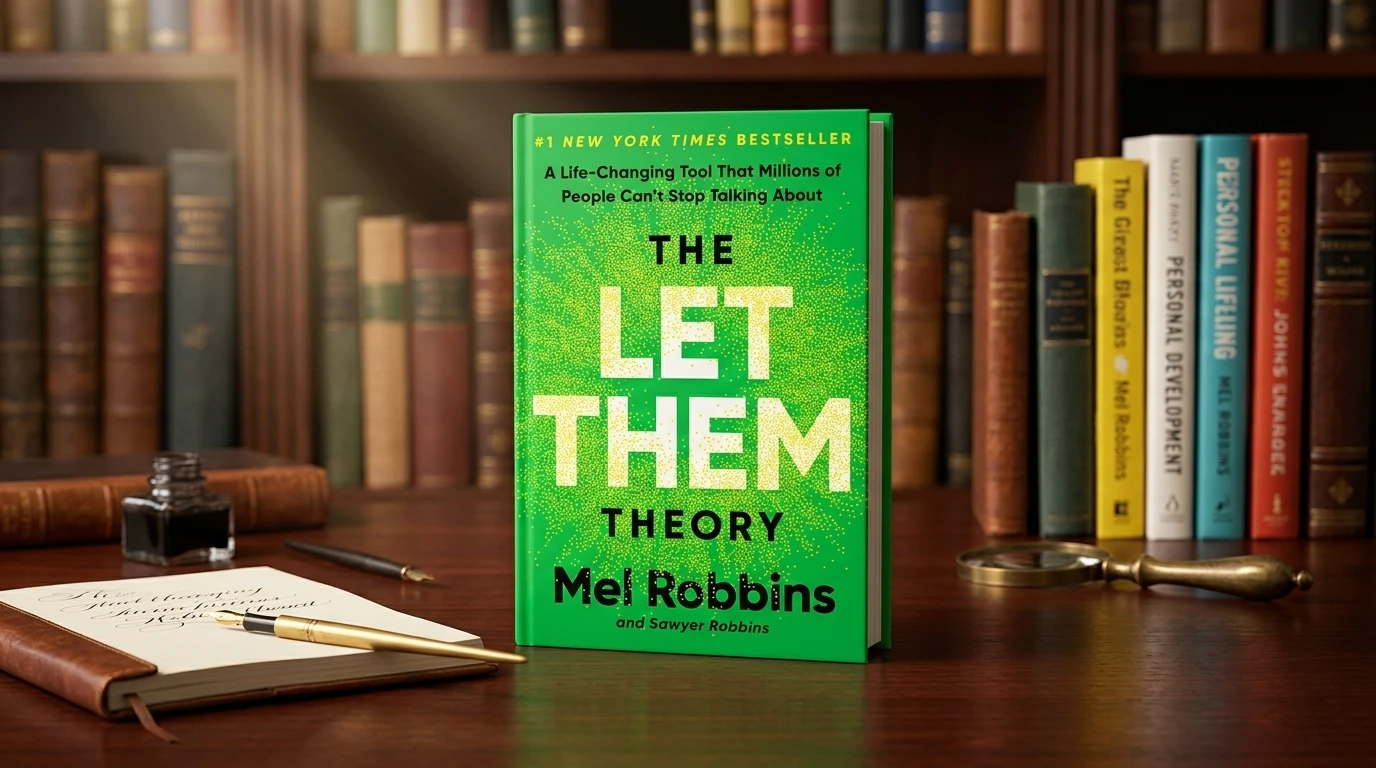
The Let Them Theory Review
The Let Them Theory Review
AT A GLANCE
The Let Them Theory review — the top-selling book of 2025 according to Publishers Weekly, with 8 million copies sold in its first eleven months, on pace to become the most successful nonfiction book launch of all time. Numbers that big demand a closer look at whether the book actually earns them.
The Let Them Theory Review: The #1 Book of 2025 Is Powerful, Padded, and Worth Reading Anyway
The Let Them Theory review verdict: read it — but go in with honest expectations. Mel Robbins’ latest is the #1 New York Times, #1 Amazon, #1 Audible, and #1 Sunday Times bestseller of 2025, named Best Book of the Year by Amazon, Goodreads, Barnes & Noble, Audible, Publishers Weekly, and Target. Those numbers are staggering. The concept behind them is two words: Let Them. As in — let other people do what they want to do, feel what they want to feel, think what they want to think, and stop spending your energy trying to control outcomes that were never yours to control. Then turn it around on yourself: Let Me — take responsibility for your own choices, energy, and direction. That is the whole framework. And for the right reader at the right moment, it lands like a freight train. For more critical readers, it lands like something they already knew stretched across 352 pages.
What Is The Let Them Theory?
The Let Them Theory teaches you how to stop wasting energy on what you can’t control and start focusing on what truly matters to you. Two simple words — Let Them — are designed to free you from the opinions, drama, and judgments of others and the exhausting cycle of trying to manage everything and everyone around you.
The framework has two halves. “Let Them” is the release — stop trying to manage other people’s behavior, emotions, and choices. “Let Me” is the pivot — redirect that energy toward your own actions and responsibilities. Robbins builds the book around her own story of controlling behavior, a moment of clarity sparked by a conversation with her daughter, and the years of reader response that followed when she shared the concept publicly.
The book covers relationships, parenting, workplace dynamics, friendships, and romantic partnerships — applying the framework to each with personal anecdotes, reader stories, and what Robbins describes as neuroscience-backed reasoning.
Affiliate link — we may earn a commission at no extra cost to you.
The Experience
Robbins is a natural storyteller and listening to her reading is like being part of a great conversation. The anecdotes she shares from her own experience are relatable and, at times, hilarious. The audiobook in particular is praised across every platform as the preferred format — Robbins narrates it herself, and her podcast-trained delivery makes the material feel like a conversation rather than a lecture.
For readers who are chronic people-pleasers, approval-seekers, or anyone who spends significant energy managing other people’s feelings, the “Let Them” concept arrives with the force of permission. Multiple Amazon reviewers describe their stress levels dropping almost immediately upon implementing the framework. Others describe crying, re-reading passages, and buying copies for friends and family. That response pattern — across tens of thousands of reviews — is not manufactured. Something in this book is genuinely connecting.
The “Let Me” half of the framework is what separates it from pure passive detachment. The combination — release control over others, then take full responsibility for yourself — is what gives the concept its practical bite. The biggest takeaway for many readers is learning that they cannot control so many things in life but have been living as if personally responsible for everything — and that it is not their responsibility to manage other people’s moods and feelings, but it is their responsibility to manage themselves.
What Works
The core concept is genuinely useful and the book delivers it with warmth, humor, and enough real-world application to make it actionable. For readers who need permission to stop people-pleasing — and there are millions of them — this book provides that permission with evidence, stories, and repetition that cements the idea deeply enough to actually change behavior.
Robbins delivers great truths with firmness but grace, and readers consistently report that stress levels decrease almost immediately when implementing the theory, especially the “Let Me” component. The chapters on adult relationships and friendships are particularly praised as the book’s strongest material.
The audiobook is exceptional. Robbins narrates with the energy and intimacy of her podcast, and for readers who respond better to heard rather than read content, this is among the best self-help audio experiences of the year.
What Doesn’t
The book’s most consistent criticism across Reddit and critical reviews is that the central concept is ancient — drawn from Stoicism, Buddhism, and decades of therapy and philosophy — repackaged as a personal discovery. The underlying concept is sound, but it is one that various philosophical and religious groups have been pitching for centuries. Readers who come to this with prior exposure to Stoic philosophy, mindfulness practice, or cognitive behavioral therapy will recognize every idea here and may find the 352 pages feel like significant padding around a concept that could be stated in a long essay.
As a writer, Robbins is not always precise — the book is often a collection of words that don’t really say anything, and some examples she uses feel disconnected from the reality of readers who don’t have the financial and lifestyle flexibility her anecdotes assume. The claim that she discovered the theory — when she opens the book by crediting her daughter — is a credibility issue that thoughtful readers consistently flag.
For the self-help skeptic, this book will not convert you. The format, the repetition, the personal-brand tone — all of it is very much genre-standard, and critics of the genre will find nothing here to change their minds.
Verdict
The Let Them Theory earned its place as the #1 book of 2025 because it delivers a genuinely freeing idea to an audience that desperately needed to hear it — and Mel Robbins delivers it with warmth, humor, and the conversational authority of someone who has spent years talking to millions of people about exactly these struggles.
Is the concept ancient? Yes. Is the book padded? Sometimes. Does it matter? For the reader who finishes it feeling lighter, less controlled by other people’s opinions, and more focused on their own choices — no, it does not matter at all.
Read it if you are a chronic people-pleaser, if you exhaust yourself managing other people’s feelings, or if you have never encountered Stoic or mindfulness philosophy before. The audiobook is the recommended format. Go in knowing what it is — a warm, accessible, sometimes repetitive delivery of a concept that works — and it will deliver exactly what it promises.
Affiliate link — we may earn a commission at no extra cost to you.
✅ What Works
- Robbins’ voice is exceptional — audiobook is one of the best self-help listens of the year
- The Let Me pivot gives the framework real practical bite beyond passive detachment
- For chronic people-pleasers this arrives with the force of genuine permission
❌ What Doesn’t
- The concept is ancient — Stoics and Buddhists got here centuries ago
- 352 pages for two words — padding is real even if the storytelling carries it