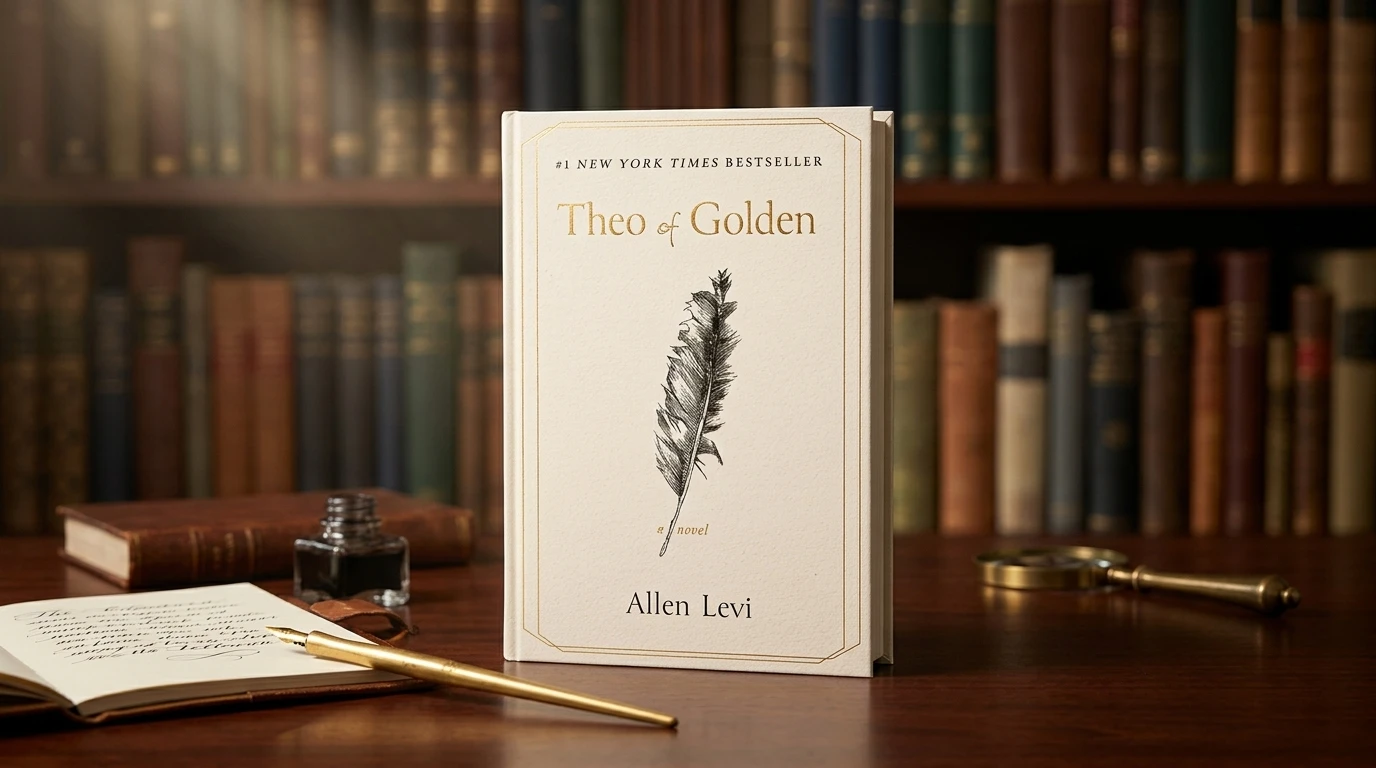
Theo of Golden: A Novel
Theo of Golden Review: How Did Nobody Know This Book Existed?
AT A GLANCE
Theo of Golden review — Allen Levi’s debut novel was self-published in 2023, sold 150,000 copies by word of mouth alone, landed a major publisher deal, hit the New York Times bestseller list for 15 weeks, and reached #1. That kind of journey does not happen by accident.
Do No Harm Review: Henry Marsh’s Brain Surgery Memoir Is One of Theo of Golden Review: The Quiet Debut Novel That Became a New York Times #1 Bestseller
Theo of Golden review verdict: read it slowly and let it work. Allen Levi’s debut novel is one of the most unlikely publishing success stories in recent memory — self-published by a first-time author in his sixties, sold entirely through word of mouth, picked up by Atria Books, and eventually hitting #1 on the New York Times bestseller list after 15 weeks on the chart. It has a 4.56-star rating on Goodreads — higher than the 2025 Booker Prize winner and the 2025 National Book Award winner. The question worth asking is not whether this book is popular. It is. The question is whether it deserves to be. The honest answer is: mostly, yes.
What Is Theo of Golden?
One spring morning, a stranger arrives in the small southern city of Golden. No one knows where he has come from or why. His name is Theo. And he asks a lot more questions than he answers. Theo visits the local coffeehouse, where ninety-two pencil portraits hang on the walls — portraits of the people of Golden done by a local artist. He begins purchasing them, one at a time, and putting them back in the hands of their rightful owners. With each exchange, a story is told, a friendship born, and a life altered.
That is the whole plot. And in lesser hands it would be a concept in search of a novel. What Levi does with it is something else — a quietly moving meditation on kindness, generosity, and what it means to truly see another person. The writing is often exquisite. Levi has a gift for atmosphere and tenderness. His descriptions carry a reverent stillness, and several scenes land with genuine emotional force.
The book has a Christian undertone that runs throughout — while there is a Christian slant, the book is never preachy, and the author’s message of compassion is universal. Readers of faith will find it deeply resonant. Secular readers who approach it with an open mind will find the central themes of generosity and human connection land regardless of their beliefs.
Affiliate link — we may earn a commission at no extra cost to you.
The Experience
Theo of Golden is a book of rare beauty — entrancing in its writing, its narrative, and the mystery of who Theo is and where he came from. The novel opens slowly and deliberately, and that pace is intentional. Theo starts slowly for a reason. The pace is deliberately countercultural because our phone-addicted society needs to be slowed down. Readers who push through the opening chapters and surrender to that rhythm will find themselves rewarded — multiple reviewers across Amazon and Goodreads describe crying at the final chapters without quite being able to explain when the book got under their skin.
The plot revolves around an eclectic group of people in Golden — an intelligent homeless woman, a local musical busker, a single sad father, a little girl suffering from a tragedy, a bookseller running from his past, a music virtuoso, and a remarkable artist trying to make ends meet. These are the people that Theo of Golden is about, and how one old man can touch so many lives.
The audiobook is specifically praised by multiple readers as an exceptional way to experience the novel. If you are choosing a format, it is worth considering.
What Works
The writing is Theo of Golden’s strongest asset. Levi’s prose has a warmth and specificity that most debut novelists do not achieve. His descriptions of the Southern landscape, the coffee shop portraits, and the individual lives of Golden’s residents are rendered with genuine affection and care. You feel the town. You come to know its people.
The central conceit — an old man who sees people clearly enough to return their own image to them — is emotionally generous in a way that stays with you. Readers are encouraged to see those around them through Theo’s eyes, focusing on their gifts rather than their failings. That is a simple idea executed with enough craft that it lands as wisdom rather than sentiment.
The mystery of who Theo is and why he chose Golden provides just enough forward momentum to carry the reader through the quieter middle sections. When the answer finally arrives, it comes as a shocking incident that most readers do not see coming.
What Doesn’t
The repetitive structure is the book’s most consistent criticism across every platform. The same plot beats repeat throughout: Theo buys a portrait, meets the person behind it, they talk, lives are changed forever — and this starts to feel repetitive even with the kind messaging. By the midpoint, readers who have not fully committed to the novel’s rhythm will feel the formula.
Theo’s midsection is baggy, its protagonist is one-dimensional, and it is not a subtle book — this is a story for adults that unabashedly repeats its moral throughout. For readers who come to literary fiction expecting complexity and moral ambiguity, Theo’s unwavering goodness can feel less like a character and more like a symbol in search of depth.
Readers who are not comfortable with Christian themes should know in advance what they are walking into. The faith elements are woven throughout and are not incidental to the story.
Verdict
Theo of Golden is the kind of book the world genuinely needs right now — a warm, unhurried story about generosity, human connection, and the quiet power of truly seeing another person. It is not a challenging read. It will not change your understanding of what fiction can do. But it will leave you feeling better about people than when you started, and that is not a small thing.
I found myself smiling through it — except for when I was sobbing. That combination — warmth and genuine emotional punch — is exactly what Allen Levi delivers, and it explains why a self-published novel by an unknown first-time author found its way to the top of the New York Times bestseller list through nothing but word of mouth.
Read it. Give yourself permission to go slowly. And then buy a second copy for someone who needs it.
Affiliate link — we may earn a commission at no extra cost to you.
✅ What Works
- Levi’s prose has warmth and specificity most debut novelists don’t achieve
- The central conceit — returning portraits to their people — lands as wisdom, not sentiment
- Final chapters deliver genuine emotional punch when it counts
❌ What Doesn’t
- Repetitive structure hurts by the halfway point — the formula becomes visible
- Theo is a symbol more than a character — no moral complexity to hold onto