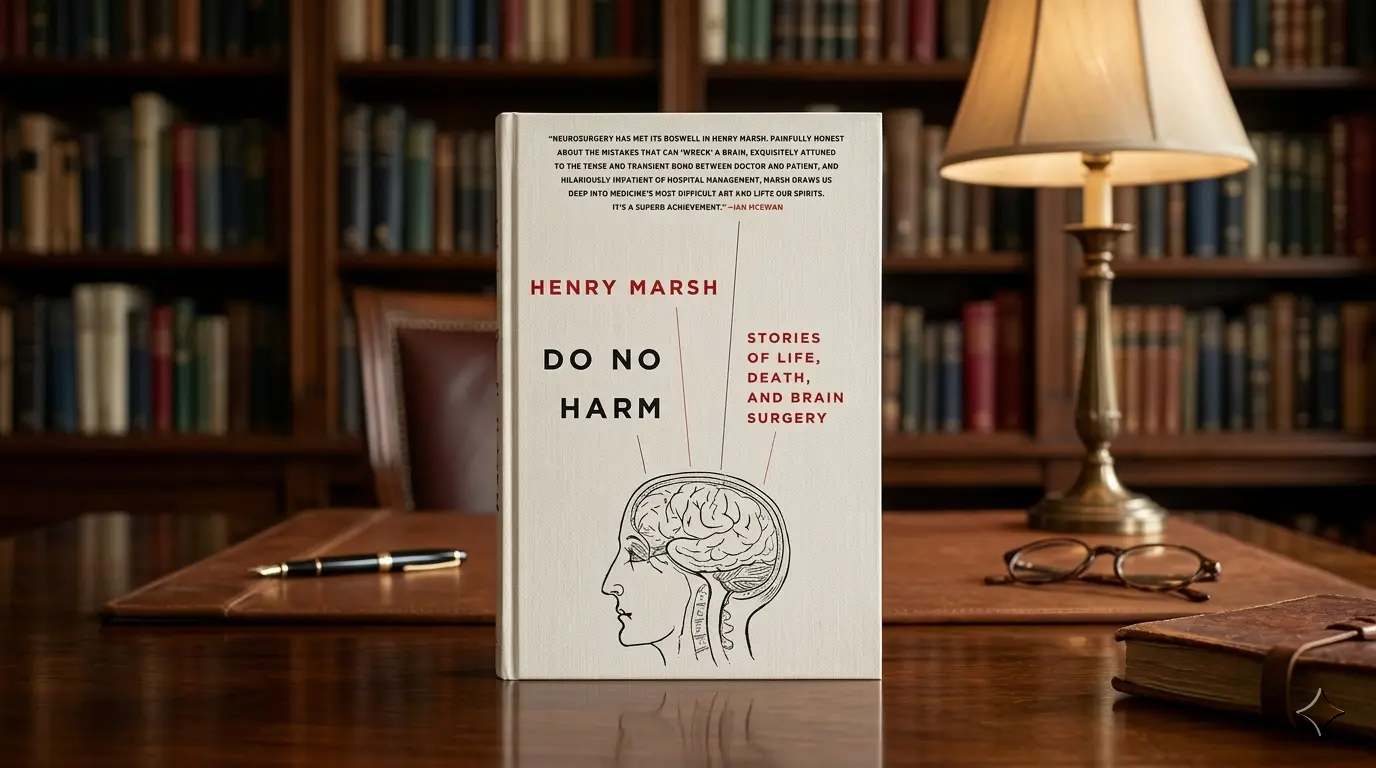
Do No Harm: Stories of Life, Death, and Brain Surgery
Do No Harm: Stories of Life, Death, and Brain Surgery
AT A GLANCE
Do No Harm by Henry Marsh is a New York Times Notable Book, a Kirkus starred review, and one of the most praised medical memoirs ever published. It is also one of the most honest books you will read about what it actually means to hold someone’s life in your hands.
Do No Harm Review: Henry Marsh’s Brain Surgery Memoir Is One of the Best Medical Books Ever Written
Do No Harm Henry Marsh review verdict: read it. Few books in any genre arrive with this level of critical consensus — starred reviews from Kirkus, Booklist, and Publishers Weekly, a New York Times Notable Book designation, and praise from The New Yorker, The Wall Street Journal, and The Washington Post. That kind of reception doesn’t happen by accident. It happens when a writer with something genuinely worth saying figures out exactly how to say it. Henry Marsh, one of Britain’s foremost neurosurgeons, has both. The result is a memoir that reads like a novel, hits like a gut punch, and stays with you long after the final page.
What Is Do No Harm?
Do No Harm is Henry Marsh’s memoir of his career as a consultant neurosurgeon at St. George’s Hospital in London — nearly three decades of operating on human brains, making impossible decisions, living with the consequences of both success and failure, and trying to make sense of what it means to practice medicine at the edge of what medicine can do.
Each chapter is named after a neurological condition — meningioma, glioblastoma, hydrocephalus — and each opens a window into a specific case, a specific patient, and the specific weight of what Marsh carries into and out of every operating theatre. The book does not follow a linear narrative. It accumulates. By the end, the reader has not just learned about neurosurgery — they have felt it.
What separates Do No Harm from the crowded shelf of medical memoirs is Marsh’s refusal to perform. He does not present himself as a hero. He does not manage the reader’s impression of him. He admits to mistakes that have left patients paralyzed. He confesses to moments of cowardice — times he could not face a patient he had harmed, or could not meet a grieving family after a surgery went wrong. That level of honesty in a profession built on authority and confidence is extraordinary. It is also what makes this book impossible to put down.
Affiliate link — we may earn a commission at no extra cost to you.
The Experience
Reading Do No Harm is a destabilizing experience in the best possible way. Marsh dismantles the image of the surgeon as a calm, detached technician and replaces it with something far more human and far more unsettling — a man who loves what he does, is very good at it, and is still haunted by every case that didn’t go the way it should have.
The surgical descriptions are vivid without being gratuitous. Marsh writes about operating on the brain with the precision of someone who has done it thousands of times and the wonder of someone who still finds it extraordinary. Readers with no medical background will follow every procedure clearly. Readers with medical training will find the level of detail impressive. Both will find themselves holding their breath at the same moments.
The book’s emotional core is the relationship between certainty and doubt. Marsh operates in a specialty where the difference between a successful outcome and a catastrophic one can be a matter of millimeters or seconds. He has been on both sides of that line more times than he can count. Do No Harm forces the reader to sit with that reality rather than look away from it — which is uncomfortable, necessary, and ultimately one of the most valuable things a book can do.
What Works
The honesty is without precedent in medical writing. Marsh does not conceal his feelings, whether dealing with patients, colleagues, assistants, or superiors, and he spares no one when matters turn out badly. Kirkus Reviews That directness extends to his own failures, his own fears, and his own limitations — a level of self-examination that most surgeons, and most writers, would never attempt.
The prose is exceptional for a debut author. Marsh writes like a novelist Amazon — structuring each chapter with dramatic tension, deploying the right detail at the right moment, and finding the exact language for experiences that most people never have access to. The writing never feels like a doctor trying to write. It feels like a writer who happens to be a doctor.
The book functions simultaneously as a gripping personal narrative and a serious examination of medical ethics, the limits of intervention, and what patients and families deserve to know about the risks they accept when they consent to surgery. Both dimensions work independently and reinforce each other throughout.
What Doesn’t
Marsh’s frustration with NHS bureaucracy and government healthcare policy runs throughout the book and occasionally dominates chapters that might have been better served staying closer to the patient stories. For readers outside the UK, some of the institutional context requires patience. It is a legitimate criticism of an otherwise exceptional book — portions of Do No Harm read like a bad Yelp review Goodreads of the NHS when the institutional complaints take over from the human narrative.
This is a minor friction in a 294-page book that earns its length. It does not diminish what the book achieves.
Verdict
Do No Harm is essential reading — not just for anyone interested in medicine, but for anyone who has ever been a patient, loved someone who was sick, or wondered what it actually costs the people who practice medicine at its most extreme edge. Henry Marsh gives an answer that is more honest, more complicated, and more human than anything else in the genre.
One of the best books ever about a life in medicine, Do No Harm boldly and gracefully exposes the vulnerability and painful privilege of being a physician. BookBrowse That verdict, earned across thousands of reader reviews and some of the most respected publications in the world, is correct. Buy it, read it in a sitting or two, and expect to think about it for weeks afterward.
Affiliate link — we may earn a commission at no extra cost to you.
✅ What Works
- Unprecedented honesty — Marsh holds nothing back, including his own failures
- Prose that reads like literary fiction, not a medical report
- Raises serious ethical questions about medicine without easy answers
❌ What Doesn’t
- NHS criticism occasionally overwhelms the patient-centered chapters
- Some institutional context will feel distant to non-UK readers