Sorry! Review
Sorry! Review
✅ What Works
- Very easy to learn and teach
- The card movement makes it feel different from dice games
- Great for casual family game nights
❌ What Doesn’t
- Replay value fades pretty quickly
- Best enjoyed in short sessions
Title: Sorry!
Year Released: 2017 edition
Designers: Classic edition / modern Hasbro release
Publisher: Hasbro Gaming
Players: 2 to 4
Play Time: About 30 minutes
Age Range: 6+
Price Range: Around $6.99 on the Amazon listing at the time checked.
At a Glance:
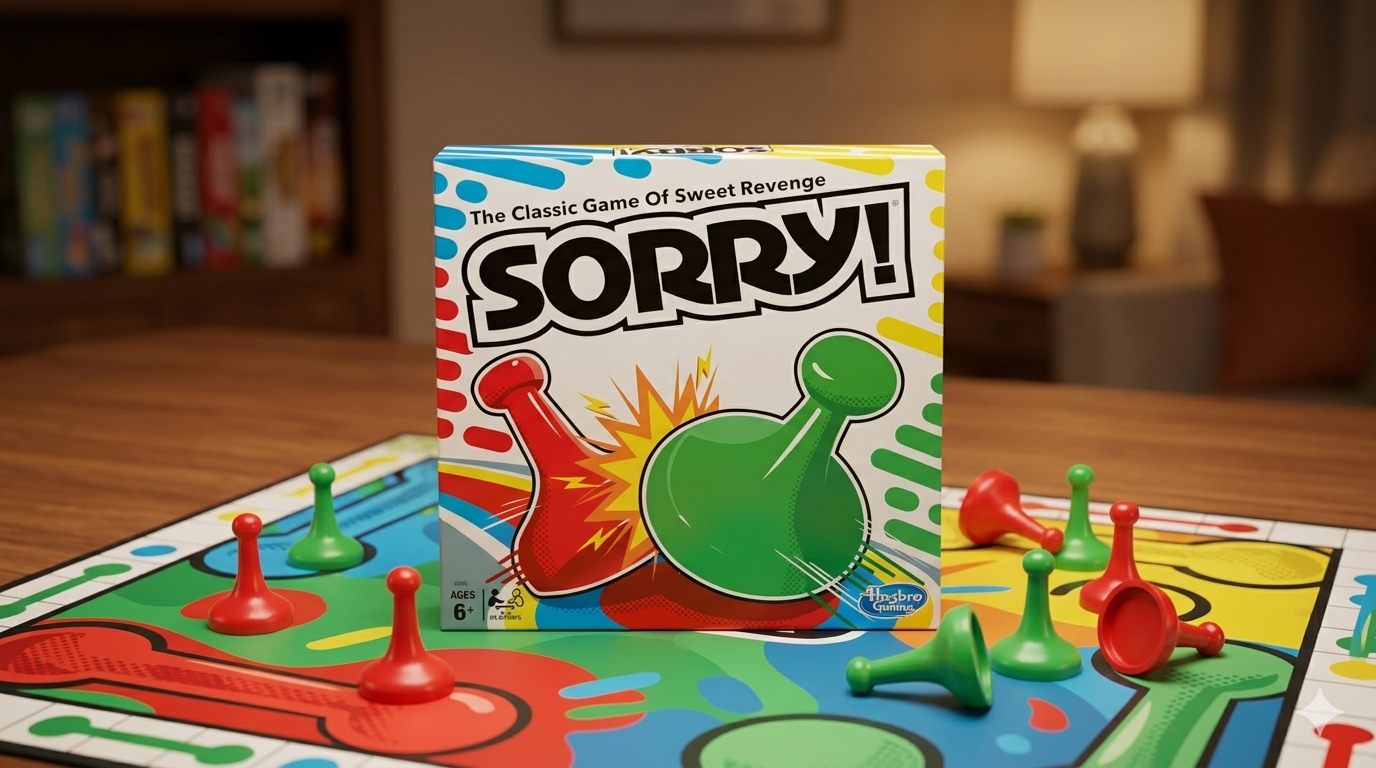
Sorry! is a classic family board game built around quick turns, simple rules, and just enough chaos to keep people laughing. This Hasbro edition is aimed at kids ages 6 and up, supports 2 to 4 players, and gives each player 4 pawns, making it a clean, casual pick for family game night.
Introduction
he Sorry! board game review verdict: Hasbro’s classic is one of the most ruthlessly fun family games ever made, and it still holds up. It is a simple, fast-moving family game that turns basic movement into a surprisingly fun mix of racing, blocking, and sending other players right back to the start.
That lines up with your take on it. The game is fun, very simple, and easy to bring out with almost any group. At the same time, it also feels like the kind of game that is best for one or two rounds before everyone is ready to move on. It is enjoyable, but it is not a game that keeps revealing new layers the longer you play.
What Is Sorry!?
This Hasbro version of Sorry! is a classic race-style board game for 2 to 4 players, recommended for ages 6 and up, where each player controls 4 pawns and tries to get them all from Start to Home first. Turns are driven by drawing cards rather than rolling dice, which gives the game a slightly different feel from many other traditional family board games.
The basic idea is easy to understand. You draw a card, follow its movement instructions, and try to move your pawns safely around the board while messing up your opponents whenever you get the chance. The official product description leans hard into that playful “sweet revenge” angle, and that really is the identity of Sorry!. It is not just about reaching the finish line. It is about doing it while constantly threatening everyone else’s progress.
First Impressions and Component Quality
This edition looks exactly like what most people expect from a modern Hasbro family game. It is bright, colorful, and easy to read at a glance. The board design is clear, the pawns are simple, and the overall presentation feels familiar rather than flashy. That works in the game’s favor because Sorry! is meant to be accessible right away.
The components seem more functional than premium. You are not getting deluxe pieces or hobby-level production, but that is not really the point here. For a budget-friendly family game, the value mostly comes from clarity and ease of use, and this version appears to deliver that well enough.
Setup and Rules
One of the best things about Sorry! is how easy it is to get to the table. Setup is minimal, the objective is simple, and the game is quick to explain to first-time players. Official instructions describe a straightforward flow: draw a card, follow the card, and keep trying to move your pawns home while avoiding getting bumped backward.
That card-based system is one of the game’s most interesting little twists. Since there are no dice, every turn feels slightly more directed, but there is still plenty of randomness. Some cards help you move out, some move you farther, and some create perfect chances to ruin someone else’s position. It is very beginner-friendly, which is a big reason this game has stuck around for so long.
How the Game Feels in Play
In play, Sorry! is light, reactive, and a little mean in the most family-friendly way possible. The fun comes from the tension of trying to make progress while knowing that one good move from another player can throw everything off. Those little moments of revenge are what keep the game entertaining. Even people who are not usually into board games can understand the appeal right away.
Your comment about the game being good for maybe one or two games feels especially accurate. The first round is usually where the novelty and tension hit best. The second round can still be fun, especially with family. After that, though, the game starts to feel repetitive because the core loop stays pretty much the same every time.
Strategy vs. Luck
Sorry! definitely leans more toward luck than strategy. The card draw controls a lot of what happens, and while players do make decisions about which pawn to move and when to pressure opponents, the game is not built around deep planning. The official rules and product copy both make it clear that the fun comes from the unpredictable results of the deck and the interactions it creates.
That works fine for the audience this game is made for. Families and casual players usually benefit from a game where nobody is permanently outclassed by a stronger strategist. But if someone wants a more thoughtful or skill-heavy game, Sorry! will probably feel too random.
Best Player Count and Who It Is For
This is a game that makes the most sense for families, kids, and casual groups. It is best for people who want something easy to learn, easy to set up, and easy to play without a lot of commitment. The official listing positions it directly as a family game night favorite, and that feels like the right lane for it.
It also plays better with more people. A fuller table creates more interaction, more tension, and more chances for those funny revenge moments that define the whole experience. For serious hobby gamers, it may feel too light, but for mixed-age groups or relaxed family nights, it still does its job well.
Replay Value
Replay value is probably the game’s biggest weakness. Even with the randomness of the cards, the overall experience does not change very much from session to session. Once you have seen the main rhythm of moving, sliding, and sending people back, you have mostly seen what the game has to offer.
That is why your point about buying it on sale makes sense. This feels less like a must-play staple and more like a good title to keep on hand for occasional use. It is nice for family nights and nice to have as part of a classic game collection, but it is not something most people will want to marathon.
Is It Worth It?
For the right audience, yes. If you want a recognizable classic that is simple, quick, and family-friendly, this version of Sorry! is an easy one to consider. The Amazon listing also shows it as a low-cost purchase, which helps a lot because the game makes more sense as a budget-friendly casual pickup than as a centerpiece game.
That said, expectations matter. This is not a deep strategy experience or a modern hobby standout. It is a light classic that delivers short bursts of fun. For families, kids, or collectors of traditional board games, that is enough.
Final Thoughts
This Hasbro version of Sorry! still does what it has always done well: it creates quick, easy fun with just enough chaos to make people laugh, groan, and immediately want payback. It is simple, classic, and accessible, even if it does not have much depth once the novelty wears off.