How to Make a Killing
How to Make a Killing
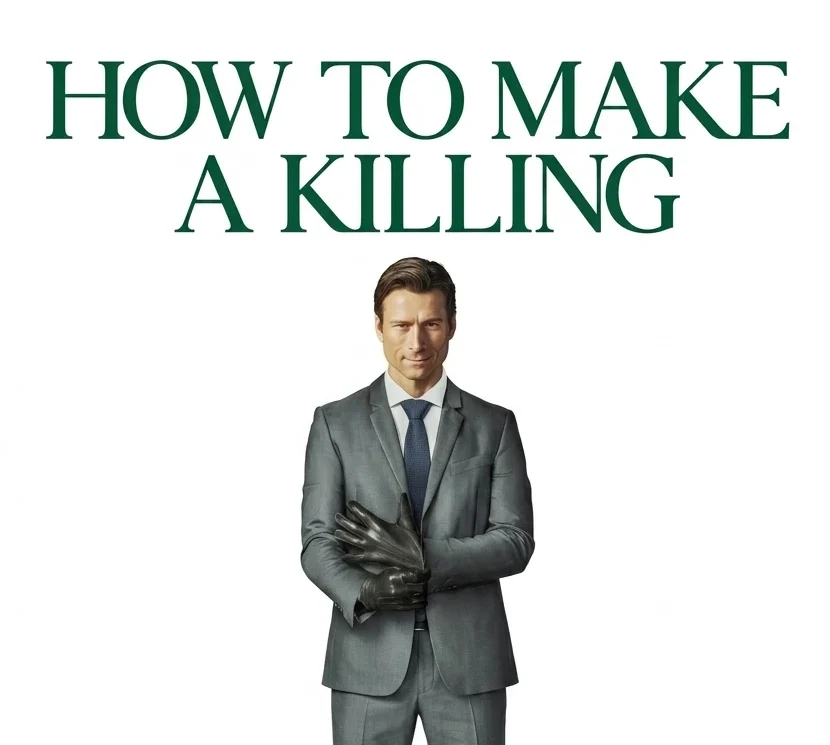
How to Make a Killing Review: Glen Powell Finally Gets to Be the Villain
If you have been watching Glen Powell coast through his career as the effortlessly charming, untouchable golden boy, this is the movie that finally flips the script on him. Think Top Gun: Maverick, Hit Man, every role where he walks in looking like a superhero and leaves without a scratch. How to Make a Killing puts him somewhere different, and that alone makes it worth your time.
Directed by John Patton Ford, the man behind the sharp and underrated Emily the Criminal, the film follows Becket Redfellow, a blue-collar outsider who was disowned at birth by his obscenely wealthy family. Once grown, Becket decides he is done being cut out of what he sees as rightfully his. So he starts methodically working through the family tree, one relative at a time, to claim the Redfellow fortune. It is dark, it is funny, and it moves fast.
What Is How to Make a Killing?
At its core, this is a black comedy thriller loosely inspired by the 1949 British film Kind Hearts and Coronets. That film followed a man who systematically eliminates the relatives standing between him and a noble title, and Ford lifts that premise and plants it squarely in modern-day New York. The result is a movie that is not interested in making Becket sympathetic in a conventional way. He has no real moral code. He is not conflicted about what he is doing. He just wants what he wants, and Powell sells every second of it.
The film opens with Becket in prison, hours from execution, giving his confession to a priest. That framing device turns the entire story into one long, darkly amusing confession, narrated by a man who is not especially sorry about any of it. It is a clever setup that keeps the movie feeling propulsive even when the plot gets a little loose in the middle.
Glen Powell Steps Outside His Comfort Zone
This is the part worth paying attention to. Powell physically transformed for this role. He dropped weight, changed his hair, and walked onto set looking noticeably different from the Glen Powell audiences have come to expect. The studio was apparently rattled when they saw him. That discomfort was the point.
Becket is supposed to be hungry. Not a polished leading man running at full capacity, but someone who has spent his whole life on the outside looking in, with a plan forming quietly behind his eyes. The leaner, quieter version of Powell that shows up here sells that idea. He is still watchable and magnetic in the way Powell always is, but there is an edge to it that his previous roles never asked for. Fans who want to see him play something other than the confident guy who always pulls it off will find what they are looking for here.
The Comedy Leans Heavier Than the Thriller
If you go in expecting a tight, tense crime film, you will need to recalibrate. How to Make a Killing is primarily a comedy that happens to involve murder. The kills are staged with a winking absurdity. Some of them stretch believability well past the breaking point, and the movie knows it. These are not gritty, realistic deaths. They are set pieces designed to get a reaction, and depending on your taste, that reaction will either be a laugh or an eye roll.
The tonal balance does not always land cleanly. There are moments where the film pushes toward something darker and more interesting, then backs off and plays it for laughs instead. Ford clearly made a deliberate choice there, and it is worth knowing going in. This is not The Menu. It is not Knives Out. It is looser and frothier than either of those, and that is fine, as long as you know what you are buying.
The Supporting Cast Carries Its Weight
Margaret Qualley is outstanding as Julia, Becket’s childhood friend who is onto him long before anyone else in the film catches on. Qualley has a particular kind of screen confidence that makes it impossible to look at anything else when she is in a scene, and the film is smart enough to use that. Her dynamic with Powell gives the movie its most interesting tension, because Julia is not a victim and she is not fooled. She is something more complicated than either of those, and Qualley plays that ambiguity with precision.
Ed Harris as the cold, dismissive patriarch Whitelaw Redfellow is exactly what the film needs in that role. He does not get a huge amount of screen time, but his presence anchors the whole premise. Every choice Becket makes traces back to this man, and Harris makes that weight feel real even in short scenes.
Zach Woods and Topher Grace round out the family with the right amount of comic obliviousness, and the overall ensemble keeps the film from resting too heavily on Powell alone.
Where It Falls Short
The script does not always dig deep enough into what makes Becket tick. There is an interesting character underneath the surface, and the film gestures at him without fully committing. You get glimpses of someone who might have turned out differently under different circumstances, but the movie moves too quickly and too lightly to let that land with any real weight.
The ending takes a more restrained path than you might expect, and it is clearly a deliberate choice rather than a lack of courage. Ford has talked openly about wanting the conclusion to carry a specific irony: Becket gets exactly what he spent the whole film chasing, and by the time he gets there, it costs him everything else. That idea is the right one. The execution of it is quieter than the rest of the film earns.
Final Thoughts
How to Make a Killing is not a perfect film, but it is a genuinely entertaining one. The kills are occasionally too outlandish to take seriously, and the thriller elements are softer than the marketing suggests. But as a comedy with a dark streak and an unexpectedly restrained lead performance from Powell, it delivers. If you have been waiting for him to play someone genuinely flawed and morally indefensible, this is your movie. Dial back your expectations for a tense thriller, lean into the absurdity, and you will walk away satisfied.
✅ What Works
- Powell finally plays someone morally indefensible — and the transformation is exactly what the role needed
- Qualley is outstanding — her dynamic with Powell is the film’s most interesting tension
- Confession framing keeps it propulsive — the premise is gripping from start to finish
❌ What Doesn’t
- Tonal balance doesn’t always click — backs off toward laughs when it could go darker
- Script doesn’t dig deep enough into Becket — the interesting character underneath never fully surfaces